Laser Cleaning Case Study – Pancake Production Hotplates
Controlled removal of heavy carbon deposits and baked-on production residue from industrial hotplates using precision laser cleaning technology.
Industrial Carbon Removal – Project Overview
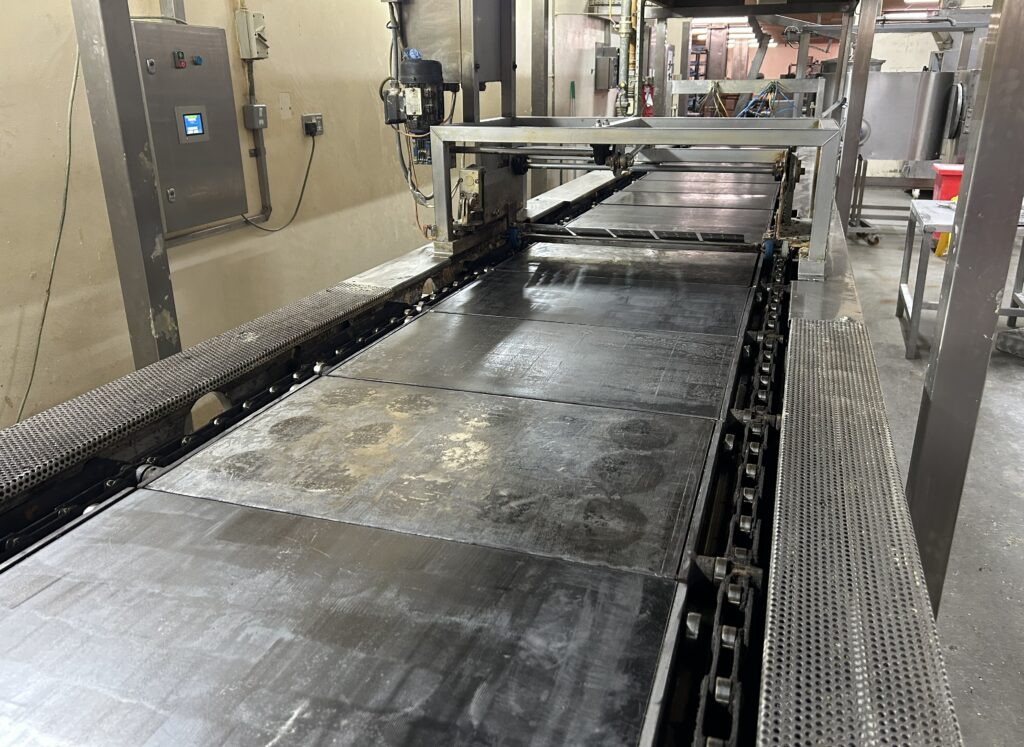
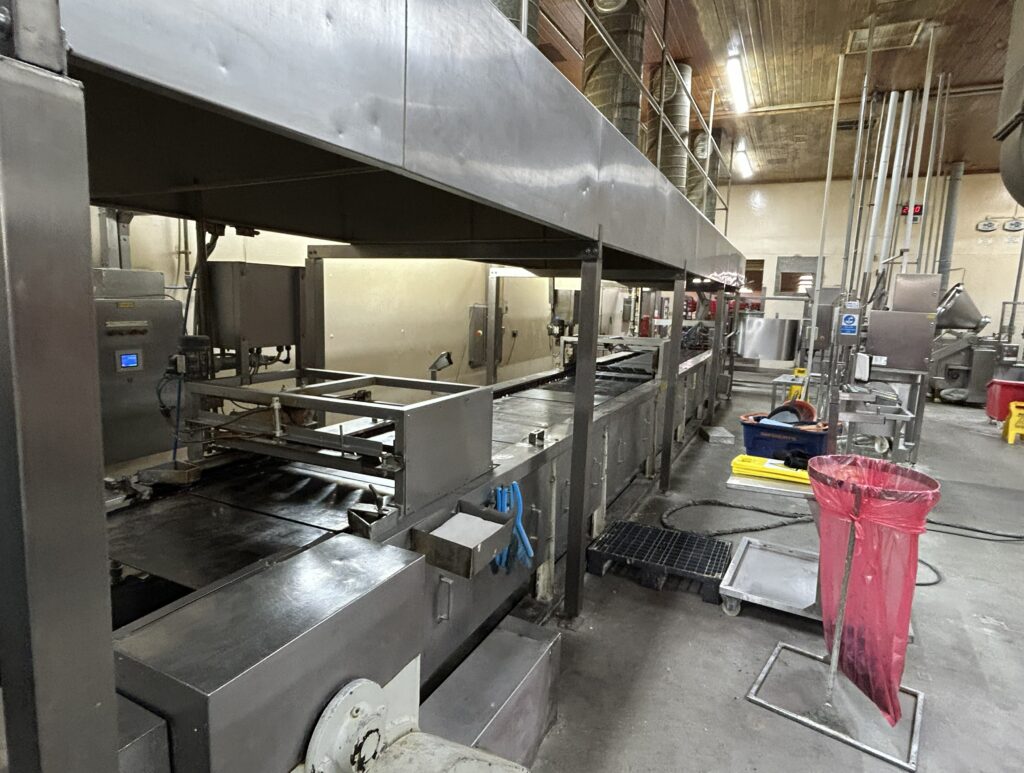
Laser Clean NI was approached by a well-known bakery to investigate a specialist bakery equipment cleaning application involving significant carbon build-up across the hotplates of an industrial pancake production line.
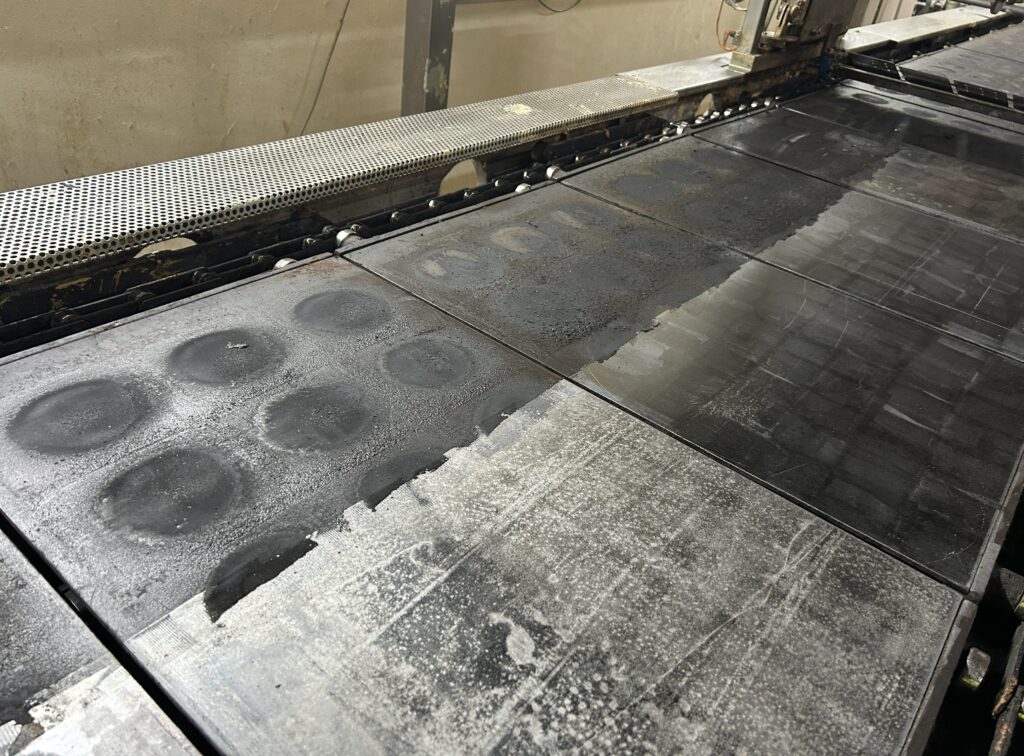
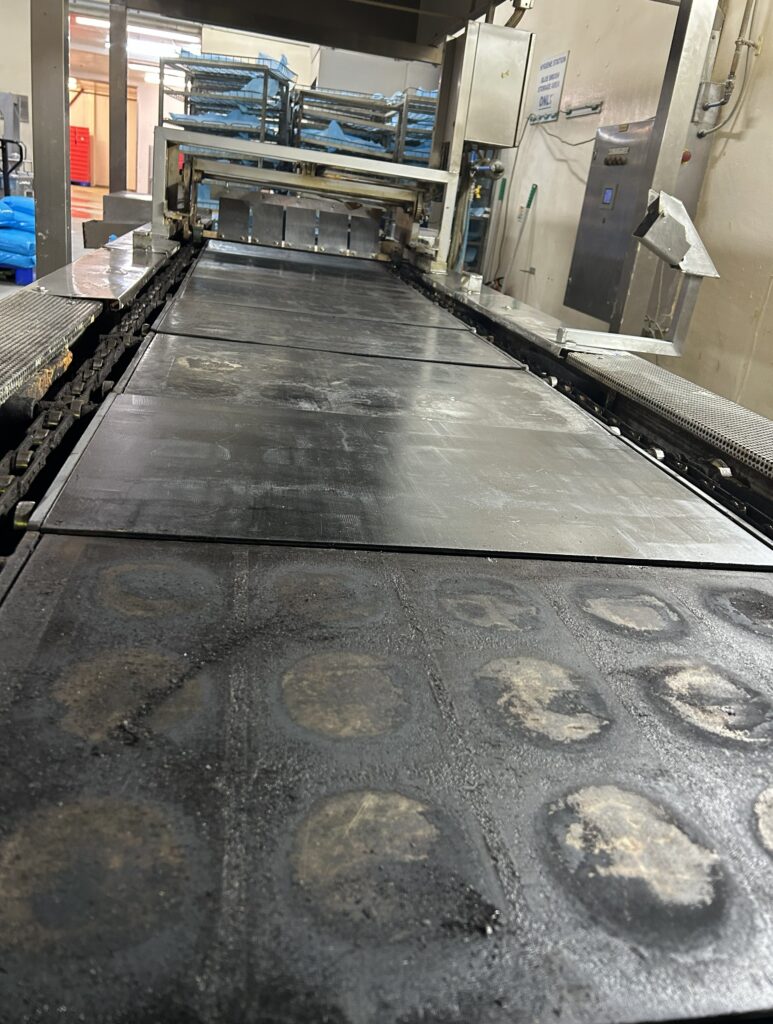
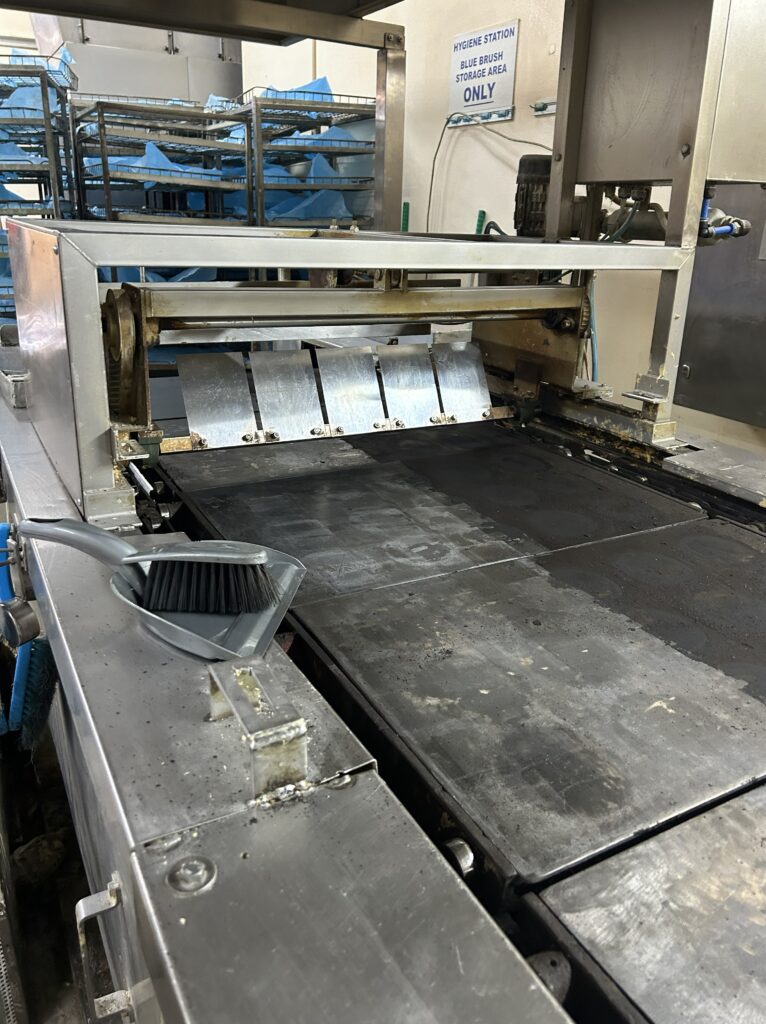
Continuous production and repeated heating cycles had resulted in substantial baked-on and carbonised deposits accumulating across the hotplate surfaces. The client required an effective carbon deposit removal method capable of tackling the contamination while maintaining control over the underlying surface.
Following assessment and testing, controlled laser cleaning was selected as the appropriate method. This allowed the accumulated carbon deposits to be progressively removed without introducing abrasive blasting media into the surrounding production environment.
.
The Challenge: Baked-On Carbon Deposits
Carbon build-up can present a significant cleaning challenge on equipment operating in demanding bakery and food production environments. Repeated heating cycles can progressively bake production residues onto surfaces, creating carbonised deposits that become increasingly difficult to remove using conventional cleaning methods.
In this case, the contamination extended across multiple hotplates along the production line, with areas of substantial baked-on carbon accumulation.
The requirement was therefore more than routine equipment cleaning. A controlled industrial hotplate cleaning process was needed to target the carbon deposits while carefully managing treatment of the underlying surface.
Our Approach – Controlled Laser Carbon Removal
Before full cleaning commenced, the hotplate surface and contamination were assessed to establish suitable laser parameters and confirm how the underlying material responded to treatment.
Our industrial laser cleaning system was then used to progressively treat the hotplate surfaces. The laser parameters and working speed could be controlled according to the condition and thickness of the carbon deposits encountered.
This controlled laser carbon removal process allowed areas of baked-on contamination to be targeted without introducing abrasive blasting media into the surrounding production environment.
The process included:
Initial inspection and testing of the hotplate surface
Assessment of the type and extent of carbon build-up
Selection of appropriate laser cleaning parameters
Controlled removal of baked-on and carbonised deposits
Progressive treatment across individual hotplate sections
Detailed treatment of areas of heavier contamination
Inspection of the treated surfaces
The Result
The controlled laser cleaning process removed significant accumulations of baked-on carbon and production residue, exposing areas of the hotplate surface that had previously been concealed beneath the deposits.
The project demonstrated the ability to tackle a challenging carbon deposit removal application using a precisely controlled process, without introducing abrasive blasting media into the production area.
It also demonstrated the potential for laser technology to address similar contamination problems across suitable industrial and food production equipment.